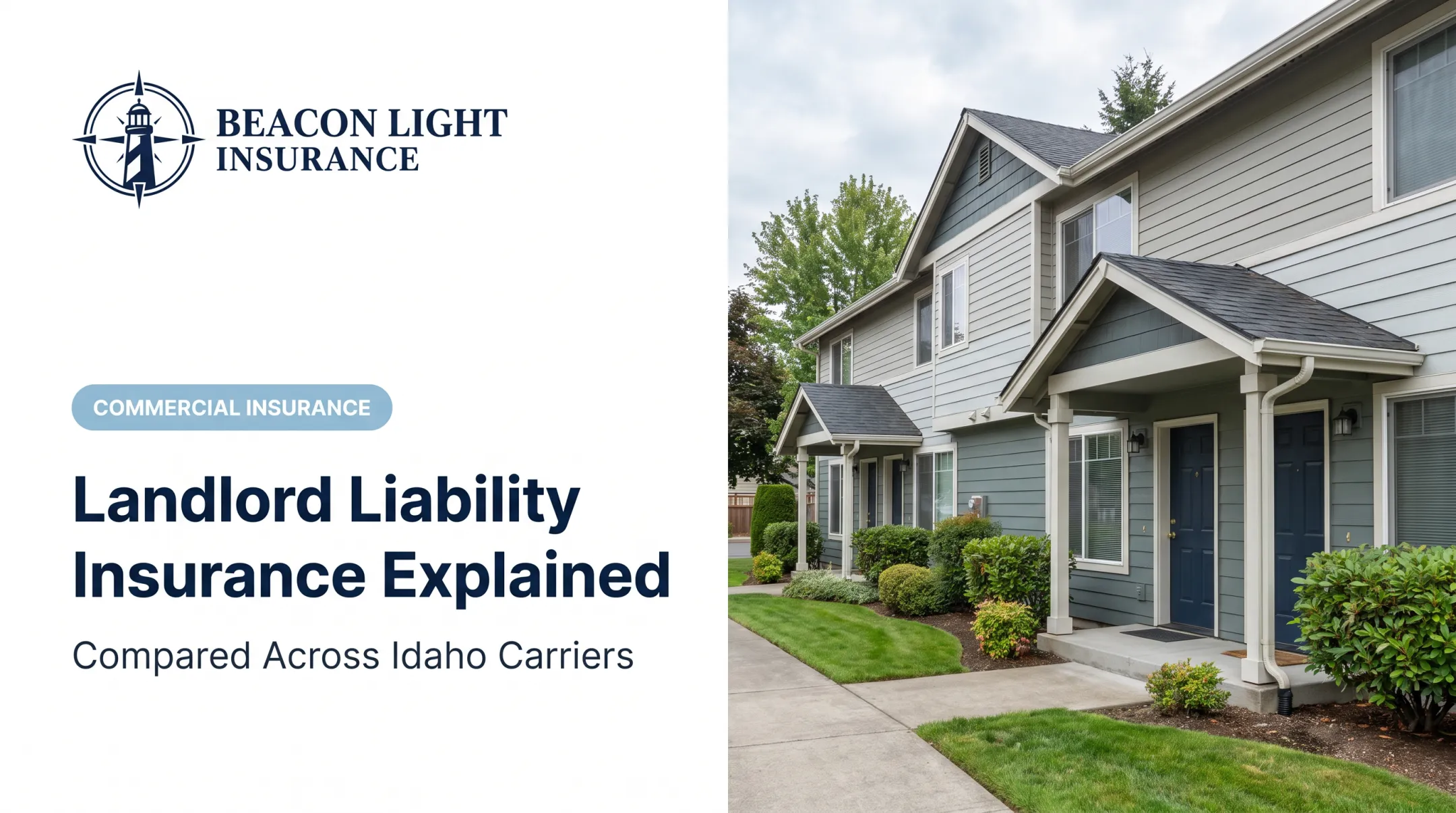

A tenant slips on an icy walkway. A delivery driver trips over a broken step. A burst pipe floods a leased unit and someone claims the landlord ignored a known problem. These situations create real legal and financial exposure for commercial property owners.
That's where lessor's risk insurance comes in, also called "lessor's risk only" or LRO. This guide breaks down what it covers, what it doesn't, how it fits with other commercial policies, and what affects the cost.
Key Takeaways
- LRO addresses landlord liability exposures tied to leased commercial premises, not every possible loss.
- Building damage, tenant property, and many third-party claims are not automatic coverage.
- Your policy terms, exclusions, limits, and how the space is used decide what is covered.
- Use LRO with other commercial policies—not as a standalone insurance program.
What Is Lessor's Risk Insurance?
In leasing terms, the lessor is the property owner or the party leasing space to someone else. The lessee (or tenant) is the party renting and operating within that space. These roles matter because insurance responsibility typically follows them.
Lessor's risk only (LRO) insurance is commercial landlord coverage for liability exposures on rented premises. It addresses claims of bodily injury or property damage tied to conditions the landlord controls. According to The Hartford's lessor's risk guide, LRO protects commercial property owners against lawsuits from tenants or tenant employees over bodily injury or property damage, and may help cover related legal defense costs.
What Counts as an "LRO Exposure"?
An LRO exposure is the possibility that a landlord faces a claim, lawsuit, or financial loss because of something tied to the property itself. That can include a maintenance failure, an unsafe common area, or a responsibility the lease assigns to the owner rather than the tenant.
Who Typically Needs This Coverage
Property types commonly associated with LRO include:
- Office buildings
- Retail spaces and strip malls
- Warehouses
- Apartment or multifamily buildings
- Mixed-use properties with retail below and residential above
LRO generally fits owners who lease out space and don't operate the primary business inside it themselves. Carriers vary on owner-occupancy rules, so confirm eligibility with the insurer rather than assuming a standard threshold applies.
Example: A tenant slips in a dimly lit common hallway and alleges the landlord failed to maintain safe lighting. If the landlord controls that hallway and the claim falls within policy terms, an LRO policy may respond to the landlord's liability exposure, including potential defense costs, subject to the specific coverage and exclusions in place.
What Does LRO Insurance Cover?
LRO's core function is liability protection. That means it's built to respond to allegations, not guaranteed payouts, and coverage always depends on policy wording.
Premises-Liability Claims
The Hartford identifies common scenarios tied to tenant or tenant-employee injuries, including slips, trips, and falls connected to leased premises:
- Poor lighting in stairwells or hallways
- Icy or unshoveled walkways
- Unsafe entrances or shared common areas
- Other hazards in spaces the landlord controls
These are examples of situations that could trigger a claim. They are not evidence that every incident automatically qualifies for coverage.
Property-Damage-Related Allegations
LRO claim scenarios can also involve property damage from events such as:
- Fire, smoke, wind, hail, or snow
- Burst pipes or sewer backup
- Vandalism, theft, or vehicle impact
Whether a specific event is covered comes down entirely to policy language. Read this list as illustrative, not a coverage guarantee.
Rental Income Considerations
Some commercial landlord insurance arrangements offer protection for lost rental income when a covered event makes leased space temporarily unusable. Travelers offers this as Business Income Rental Value coverage. It is separate from liability protection and is not bundled automatically into LRO.
What Stays With the Tenant
Tenant business property — inventory, computers, furniture, equipment, supplies — usually needs the tenant's own business personal property or commercial property insurance. LRO isn't designed to replace that.
Claim scenario: A burst pipe damages both a tenant's computer equipment and the building's drywall. The building repair may fall under the landlord's commercial property policy. The tenant's equipment likely falls under the tenant's own coverage.
LRO may come into play only if the tenant alleges the landlord's negligence caused the pipe failure and pursues a liability claim.

LRO rarely stands alone. It's typically coordinated with:
- General liability
- Commercial property insurance
- Umbrella policies
- Business owner's policies (BOPs)
- Business interruption coverage
What Does LRO Insurance Not Cover?
LRO leaves several major exposures outside the policy, and landlords often discover the gaps only after a loss.
Physical Damage to Your Building
LRO is not automatic coverage for direct physical damage to the structure you own. The Hartford's guide is explicit on this point: building repairs from fire, theft, or vandalism fall under commercial property insurance, not LRO liability coverage.
Tenant Operations and Property
A tenant's inventory, equipment, and lost business income generally require the tenant's own insurance. This is exactly why many landlords require proof of tenant coverage as a lease condition.
Third-Party Claims Involving Other Parties
Claims from customers, delivery drivers, or contractors are not the same as tenant claims. The at-fault party's general liability policy is usually primary, and the landlord's coverage only responds if the claim ties back to the landlord's own negligence or premises conditions.

Common Limitations
- Normal wear and tear
- Routine maintenance issues
- Intentional acts
- Uncovered causes of loss
- Inadequate limits or deductibles that reduce recovery
Always check actual policy wording rather than assuming coverage based on a general description.
LRO vs. General Liability vs. Commercial Property
| Coverage Type | Primary Focus | What It Doesn't Do |
|---|---|---|
| LRO | Landlord's liability exposure tied to leased premises | Doesn't repair the building or cover tenant property |
| General Liability | Bodily injury, property damage, and advertising injury from business operations | Doesn't address every landlord-specific premises exposure |
| Commercial Property | Physical loss to insured buildings and property | Doesn't provide liability protection for third-party claims |
Terms Often Confused
- Lessor — the property owner or leasing party.
- Additional insured — a party added to someone else's policy for specified protection, often used when tenants add landlords to their general liability policy via a lessor's endorsement.
- Loss payee — a party entitled to insurance proceeds tied to an insured property interest, which is a different role from being an additional insured.
Mixing them up can delay a claim payment or leave the wrong party without defense when a suit is filed.
Who Needs LRO Insurance and What Affects Cost?
LRO coverage is built for property owners who lease space to others, including:
- Commercial landlords with tenant-occupied space
- Real estate investors with multi-tenant buildings
- Retail or office property owners
- Warehouse owners
- Multifamily or mixed-use building owners
Lease and Lender Requirements
Lenders, leases, or property managers often require specific insurance provisions: minimum limits, additional insured wording, or certificates of insurance. A certificate confirms coverage was in force at a point in time, but it doesn't amend or guarantee the actual policy terms. Review your contracts carefully and loop in a qualified advisor before assuming you're covered.

What Drives Pricing
LRO pricing varies by property and risk profile. Underwriters typically weigh:
- Property location and surrounding risk factors
- Building construction, materials, and age
- Occupancy type, foot traffic, and tenant businesses
- Number of units or tenants
- Fire and safety systems, maintenance practices, and claims history
- Chosen limits, deductibles, and endorsements
Preparing for a Quote
Before requesting a review, gather:
- Property details and square footage
- Current rent roll
- Tenant business operations
- Lease insurance requirements
- Prior loss history
- Safety and maintenance procedures
- Desired coverage limits
Because pricing is individually underwritten, there's no universal LRO premium to quote here. Choosing a policy on price alone can leave real gaps. An independent agency like Beacon Light Insurance can help business owners compare carrier options, balance cost with protection, and spot coverage gaps before they buy.
Frequently Asked Questions
What is lessor's risk only (LRO) insurance?
LRO is insurance designed for commercial property owners who lease space to tenants. It may address certain landlord liability exposures, but exact protection depends entirely on the policy purchased.
What does LRO coverage cover?
LRO commonly addresses premises-liability allegations like slips and falls, plus select tenant-related property damage claims. Coverage specifics vary significantly by policy and carrier.
What is considered a lessor's risk?
Lessor's risk includes exposures like tenant injury allegations, unsafe common areas, fire, water damage, weather events, and vandalism connected to leased premises. The exact scope depends on lease terms and policy language.
What is an LRO exposure?
It's the financial and legal risk a landlord faces when a tenant or third party alleges that the property's condition, maintenance, or the landlord's retained responsibilities caused injury or damage.
What does lessor mean on an insurance policy?
A lessor is the owner or party leasing property to a tenant (the lessee). The term itself doesn't define coverage; that comes from the policy's actual terms.
Is a lessor the same as a loss payee?
No. A lessor describes the party leasing out the property. A loss payee has a financial interest in insured property and may receive claim proceeds under specific policy terms. Those are two entirely different roles.