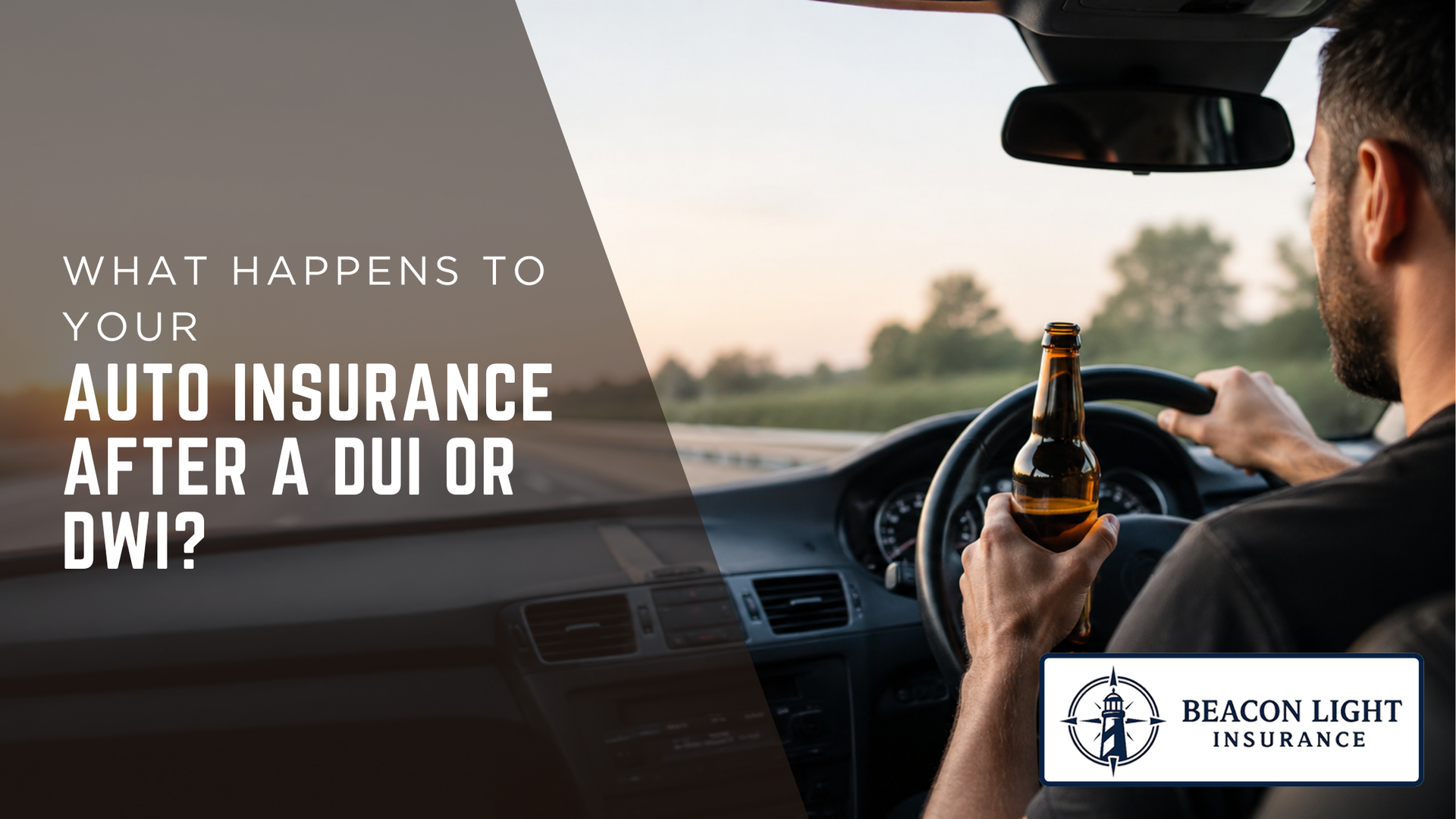
A DUI or DWI can affect far more than your driving record. For drivers in Star, ID, one serious violation can change how insurance companies view your risk, how much you pay, and whether your current carrier is still willing to offer coverage.
Why A DUI Or DWI Matters To Auto Insurers
Auto insurance companies base pricing partly on risk. A DUI or DWI signals that a driver may be more likely to be involved in a serious accident, receive future violations, or create costly liability claims. Because of that, insurers typically treat alcohol- or drug-related driving offenses as major violations.
The direct answer is this: after a DUI or DWI, your auto insurance may become more expensive, your policy may be non-renewed, your eligibility for preferred rates may change, and you may need proof-of-insurance filings depending on state requirements and your situation. The exact impact depends on your carrier, driving history, prior claims, policy type, and how the violation is reported.
In our work with clients, a common issue we see is that drivers focus on court fines or license consequences but underestimate the insurance impact. The premium increase can last beyond the immediate legal process.
Your Premium May Increase Significantly
A DUI or DWI is usually considered a major rating factor. Once the violation appears on your motor vehicle record, your insurer may increase your premium at renewal or when the policy is reviewed.
The increase can vary widely. Some drivers may see a moderate jump, while others may see a much larger increase depending on their prior record, age, vehicle, coverage limits, and whether an accident was involved.
The cost impact can be even greater if the DUI or DWI happened with other issues, such as:
- An at-fault accident
- Injury to another person
- Property damage
- A reckless driving charge
- A license suspension
- Prior speeding tickets
- Prior accidents
- Multiple violations in a short period
A clean driving record before the incident may help compared to a record with multiple prior violations, but the DUI or DWI will still be taken seriously.
Your Current Carrier May Not Renew The Policy
Some
insurance companies may continue coverage after a DUI or DWI, but at a higher rate. Others may decide not to renew the policy when the current term ends. In some cases, the carrier may remove preferred discounts or move the driver into a different rating tier.
A non-renewal does not mean you cannot get insurance. It means that particular carrier may no longer want to insure the risk under its current guidelines.
A common mistake is waiting until the last minute to look for replacement coverage. If your carrier sends a non-renewal notice, start reviewing options promptly. Letting coverage lapse can make the situation worse and may lead to higher premiums, registration problems, or additional legal consequences.
You May Need A Proof-Of-Insurance Filing
After certain serious driving violations, a driver may be required to file proof of financial responsibility. Many people refer to this as an SR-22, although terminology and requirements can vary by state.
An SR-22 is not a separate
insurance policy. It is a filing that your insurance company provides to the state to show that you carry the required auto liability coverage. Not every insurer offers this filing, and some carriers may decline to insure drivers who need it.
If a filing is required, it is important to maintain continuous coverage for the required period. If the policy cancels or lapses, the insurer may notify the state, which can create additional license or registration problems.
For drivers near Riverwalk Park or traveling along State Highway 44, keeping coverage active is not just about protecting the vehicle. It may also be tied to keeping driving privileges in good standing.
Coverage Options May Become More Limited
After a DUI or DWI, you may have fewer insurance options. Some preferred carriers may decline the application. Others may offer coverage only at higher rates or with stricter underwriting.
You may need to consider carriers that specialize in higher-risk drivers. These policies can be more expensive, but they may provide a path to staying insured while the violation ages.
Important factors insurers may review include:
- Date of the violation
- Whether it was a first offense
- Whether an accident occurred
- License status
- Required filings
- Prior claims
- Prior violations
- Vehicle type
- Coverage limits requested
- Household drivers
The best option is not always the first quote. It may be worth comparing several carriers, especially if your current insurer no longer offers competitive pricing.
Discounts May Be Lost
A DUI or DWI can also affect discounts. Even if your base rate increases, losing discounts can make the total premium rise even more.
Discounts that may be affected include:
- Safe driver discount
- Claims-free discount
- Preferred driver discount
- Accident-free discount
- Good driver tier pricing
- Telematics-based discounts, depending on program rules
This is one reason the premium change can feel larger than expected. The policy may be affected by both the violation surcharge and the loss of favorable rating factors.
If An Accident Was Involved, The Impact Can Be Greater
A DUI or DWI with an accident is often more serious from an
insurance standpoint than a violation alone. If another person was injured or property was damaged, the claim may involve liability coverage, vehicle repairs, medical bills, legal defense, and potential lawsuits.
Your insurer will review the facts of the claim and the policy language. Coverage may still apply in many situations, but intentional acts, criminal conduct, exclusions, and policy conditions can become important depending on the circumstances.
If your own vehicle was damaged, collision coverage may be relevant if included on the policy. If you carried only liability coverage, damage to your own vehicle may not be covered.
A serious accident can also make future insurance placement more difficult, especially if the claim payout was large.
Your Household Policy May Be Affected
A DUI or DWI can affect more than the individual driver. If the driver is listed on a household policy with multiple vehicles or family members, the entire
policy premium may increase.
Other household members may also be affected if the carrier no longer wants to insure the policy because of one driver. In some cases, the insurer may require the high-risk driver to be rated, excluded, or placed on a separate policy, depending on state rules and carrier guidelines.
Driver exclusions should be handled carefully. If an excluded driver operates the vehicle and causes an accident, coverage may be denied. Do not agree to an exclusion unless everyone in the household understands the consequences.
How Long The Insurance Impact Can Last
The insurance impact of a DUI or DWI does not usually disappear immediately. Insurers may consider major violations for several years, depending on their underwriting and rating rules.
Over time, the effect may lessen if there are no new violations, no additional claims, and continuous insurance is maintained. A future policy review may eventually open access to better pricing or more preferred carriers.
For drivers in Star, ID, the most practical approach is to treat the years after a DUI or DWI as a rebuilding period. Maintain coverage, avoid lapses, drive carefully, and review options at each renewal.
Steps To Take After A DUI Or DWI
Once the immediate legal and licensing issues are being addressed, review your
auto insurance situation carefully.
Practical steps include:
- Confirm whether your current policy is still active
- Ask whether a proof-of-insurance filing is required
- Avoid a lapse in coverage
- Review your liability limits
- Compare quotes if your premium increases sharply
- Ask whether your carrier offers required filings
- Update household driver information accurately
- Consider defensive driving or education programs if available and relevant
- Review coverage again at each renewal
A common mistake is reducing coverage too aggressively just to lower the premium. Dropping important liability limits or physical damage coverage may save money now but create serious financial exposure after another accident.
Conclusion
A DUI or DWI can affect
auto insurance through higher premiums, lost discounts, non-renewal, limited carrier options, proof-of-insurance filing requirements, and added complications if an accident was involved. The impact can last for multiple years, but maintaining continuous coverage and avoiding additional violations can help over time. For drivers in Star, ID, the key is to respond quickly, understand the insurance requirements, and review coverage carefully before making changes.
At Beacon Light Insurance, we put our clients first by helping them find reliable insurance coverage that fits their needs and budget. Insurance is an essential part of protecting what matters most, and our experienced team is here to guide you every step of the way. To learn more about our products and services, call us at (208) 820-2880 or request a free, no-obligation quote by Clicking Here.
Disclaimer:
The information provided in this blog is for general informational purposes only and does not constitute professional insurance advice. Coverage options and requirements can vary based on individual circumstances. For personalized recommendations, please consult a licensed insurance agent or qualified professional who can help you make informed decisions based on your specific needs.
Beacon Light Insurance
Star, ID
(208) 820-2880
https://www.beaconlight-insurance.com/